Quick Answer
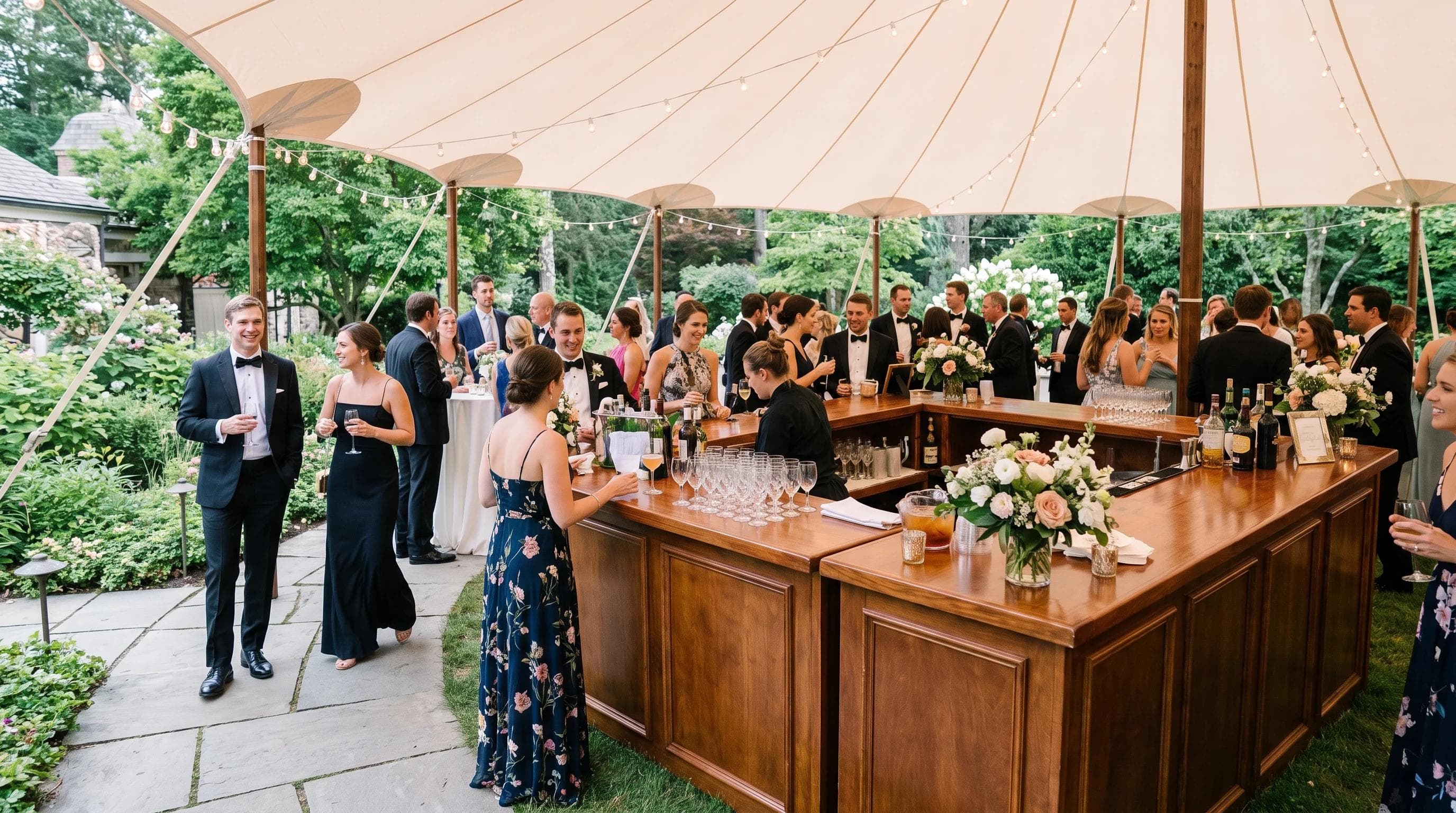
A flawless wedding cocktail hour depends on three logistics decisions: beverage station placement that avoids bottlenecks, a staffing ratio of roughly one barista per 75–100 guests, and a service window matched to the actual length of cocktail hour rather than the full reception. Getting these three details right prevents the long lines that undermine an otherwise well-planned event.
Executive Takeaways
- Beverage station placement should create flow, not funnel — positioning near but not inside high-traffic pathways prevents bottlenecks.
- A staffing ratio of one barista per 75–100 guests keeps wait times reasonable during a typical 60–90 minute cocktail hour.
- Matching service duration to the actual cocktail-hour window (rather than running the station the full reception) keeps staffing costs proportional to guest experience.
Placement Is the First Decision, Not the Last
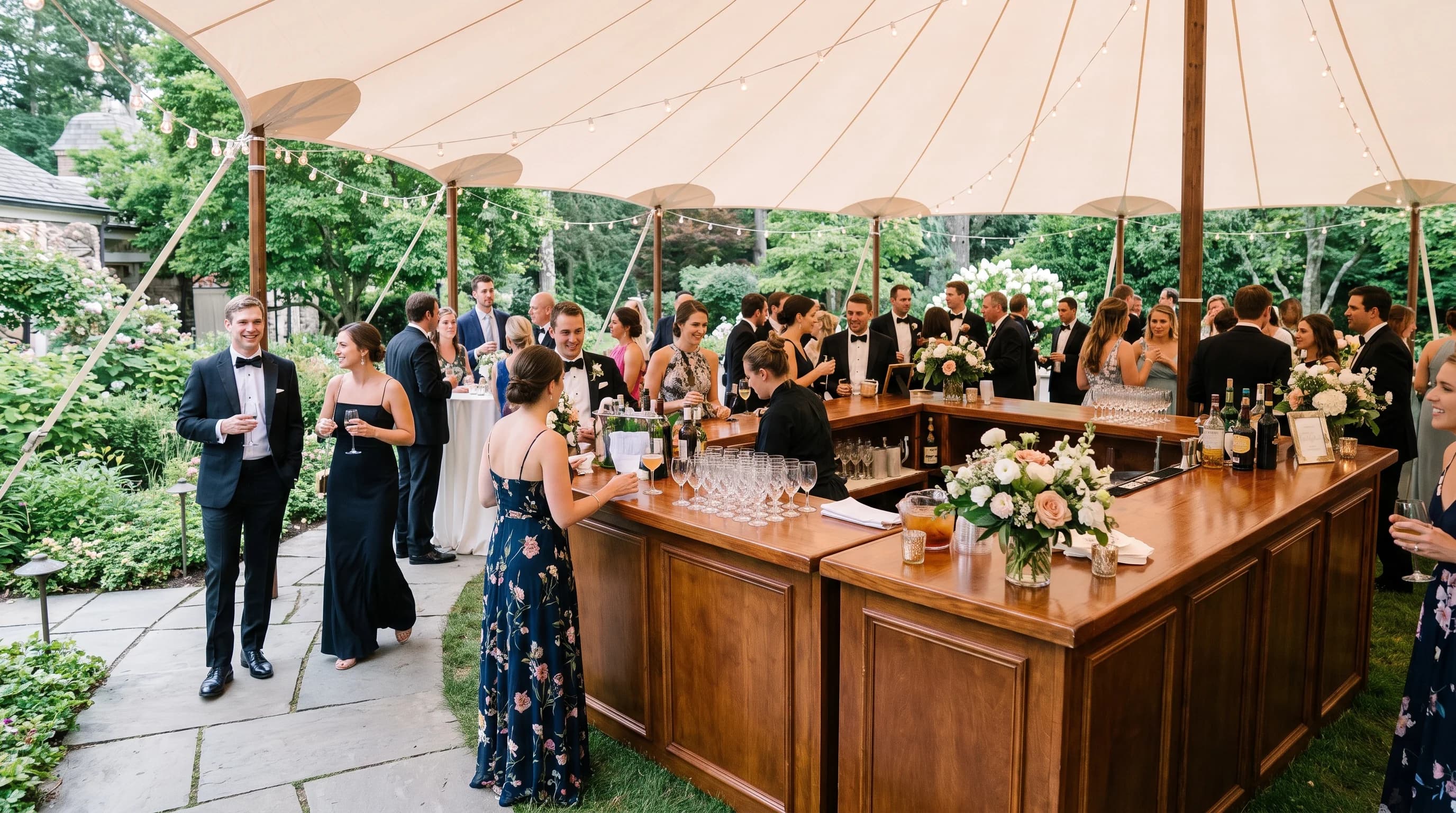
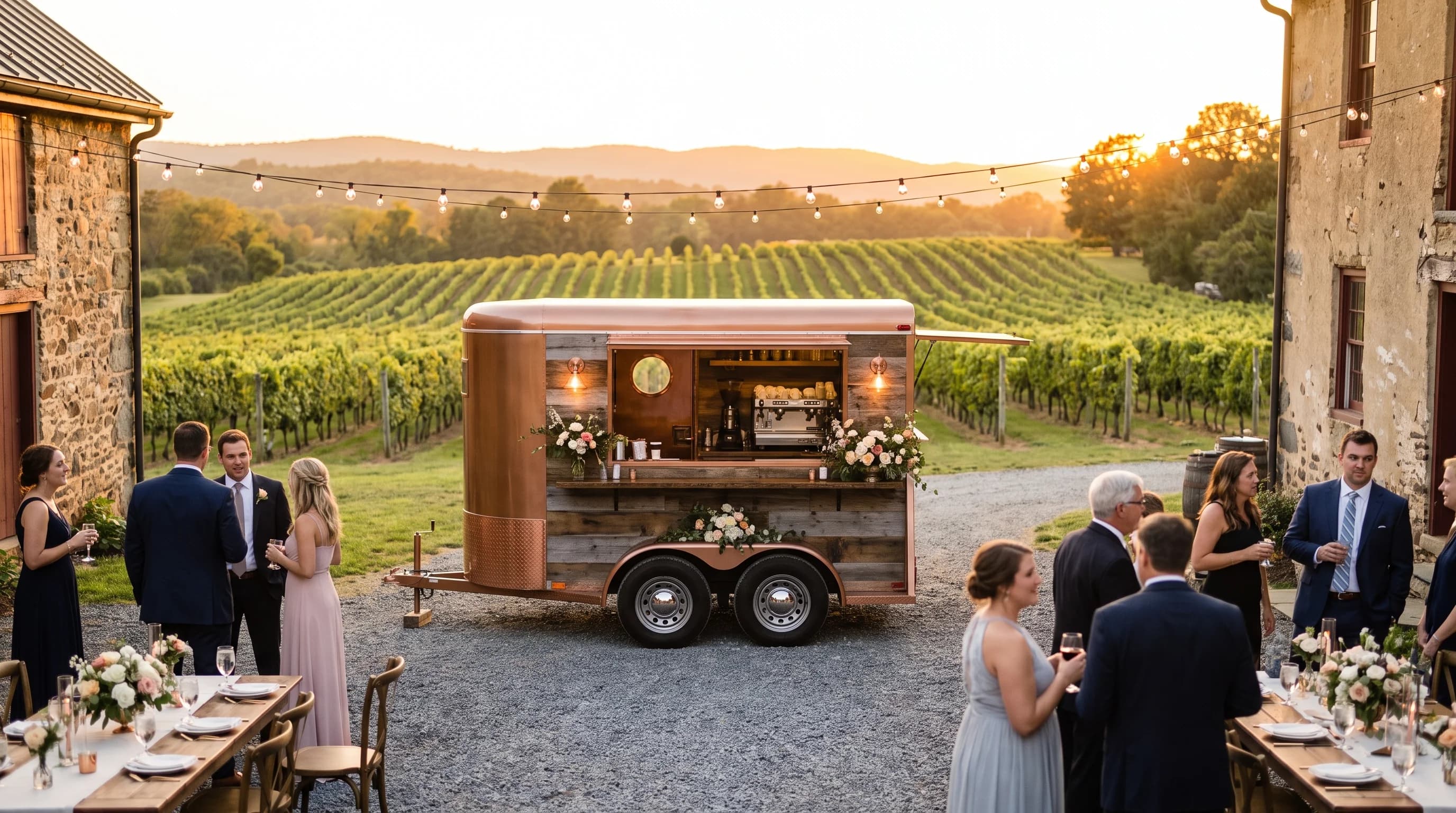
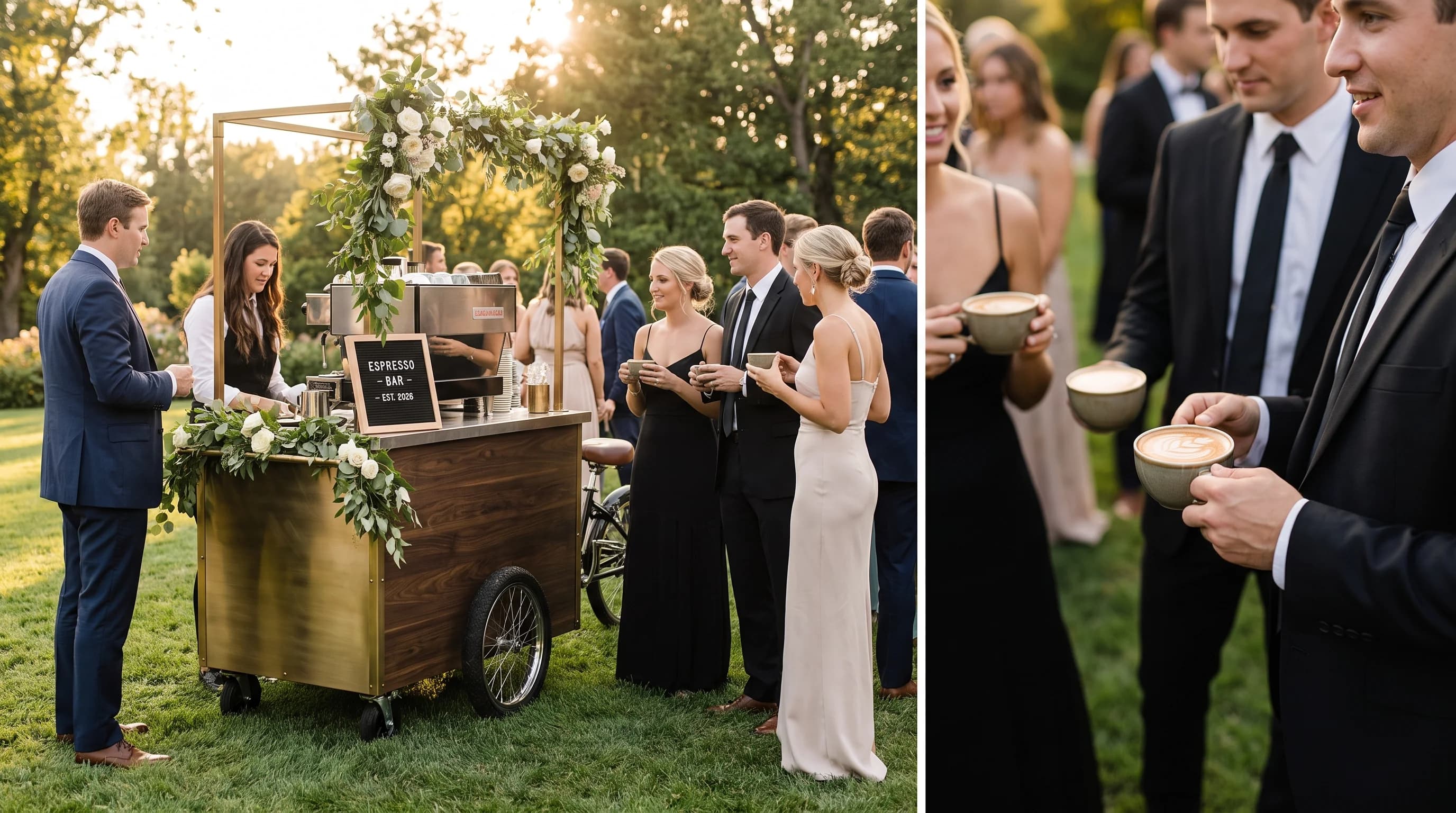
Most cocktail-hour logistics problems trace back to one decision: where the beverage station sits relative to guest flow. A station placed directly in the pathway between ceremony and reception space becomes a bottleneck almost immediately. The fix is simple but often overlooked — position the station adjacent to natural gathering points, not inside the walking path itself.
Staffing Ratios That Actually Hold Up
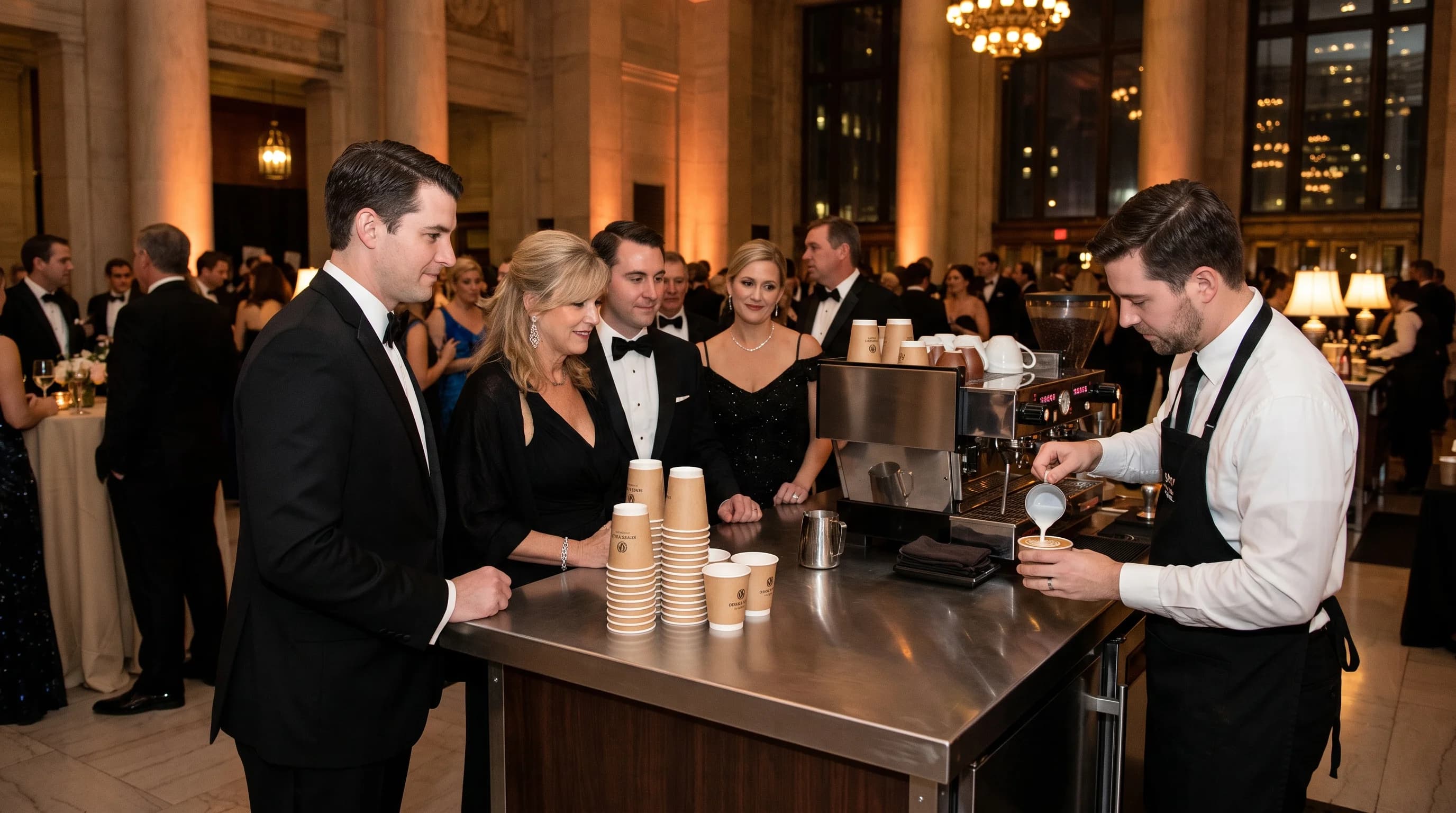
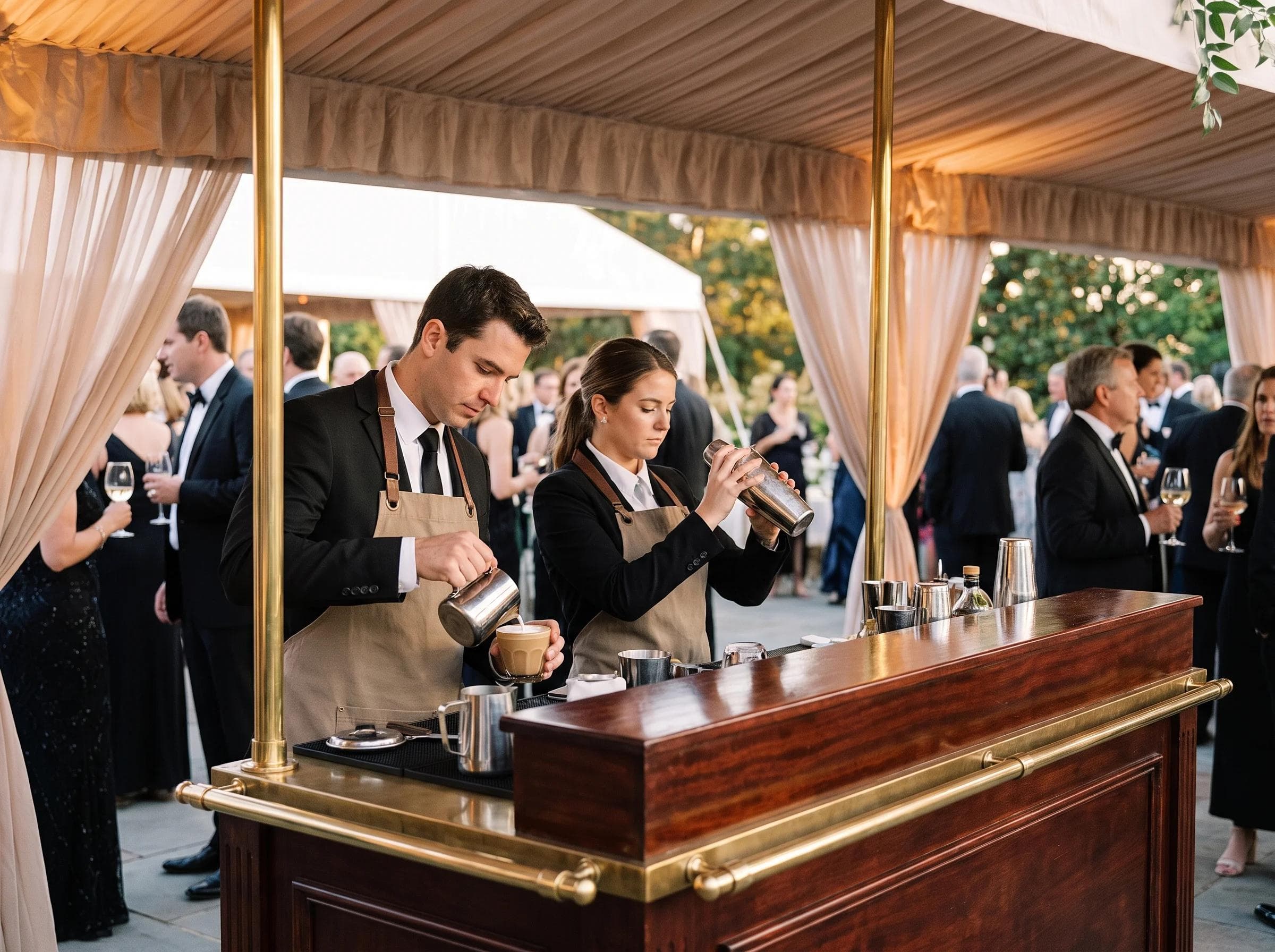
One barista per 75–100 guests is the ratio we've refined over hundreds of DMV events. Below that ratio, lines build past the point guests are willing to wait; above it, you're paying for staffing capacity you don't need. For guest counts above 200, two baristas working in parallel — rather than one barista working faster — keeps both quality and pace intact.
Matching Duration to Reality
Cocktail hour is, almost by definition, an hour — sometimes 90 minutes with photos running long. Booking beverage service for the full 5-hour reception when only cocktail hour needs it is a common overspend. We help clients map service windows to when guests are actually circulating and available to visit the station, rather than defaulting to 'the whole event.'
The Weather Contingency Most People Skip
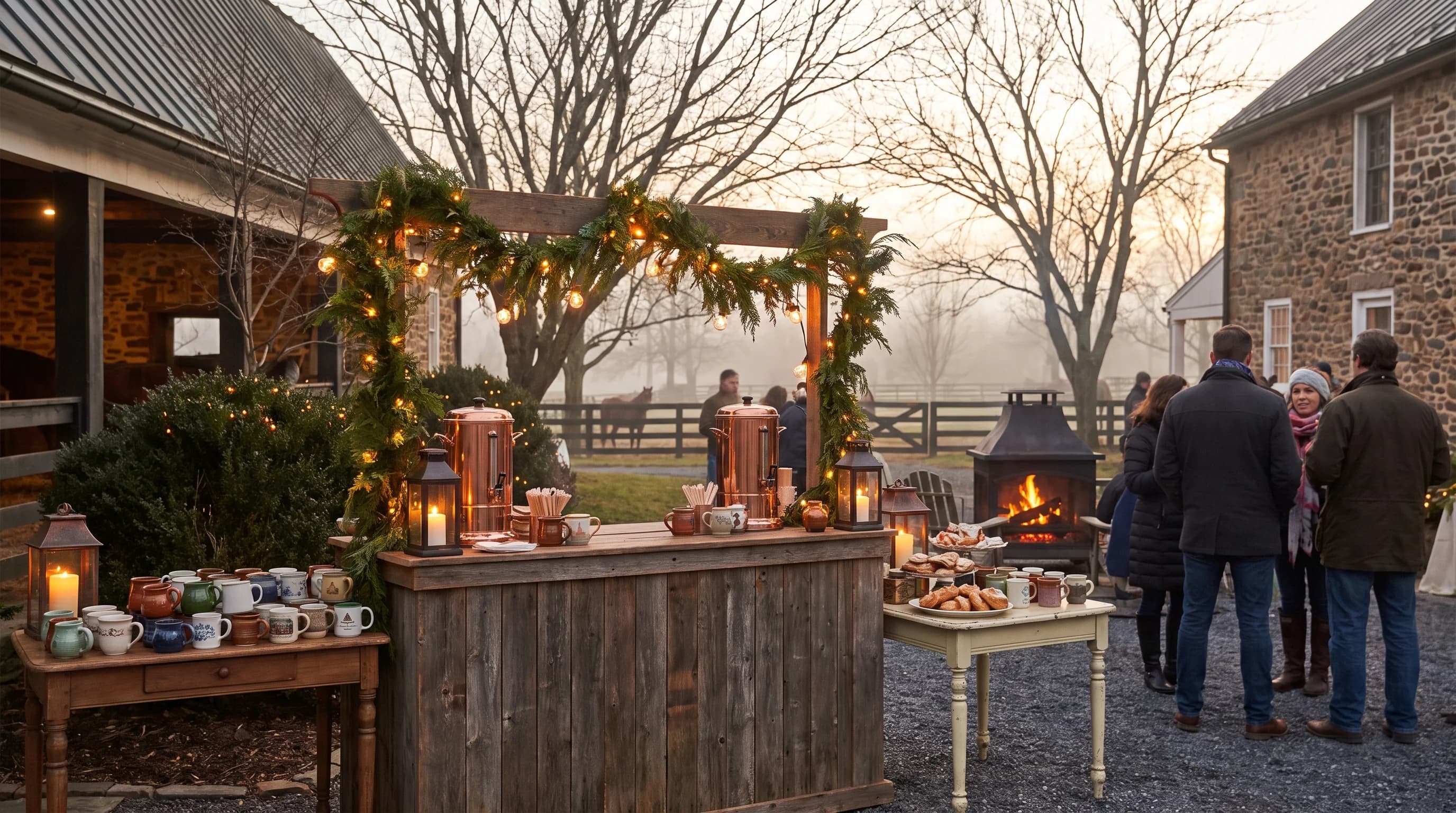
Outdoor cocktail hours need a real backup plan, not a hopeful one. Our setup relocates in minutes to a covered or indoor space, but that only works if the backup location has been identified and confirmed with the venue in advance — not improvised the day of.
Inspired by Event Styling?
Let's curate a beverage experience this thoughtful for your celebration.
Frequently Asked
One barista comfortably serves 75–100 guests during a typical 60–90 minute cocktail hour window without wait times becoming disruptive.
Founder & Lead Beverage Curator